
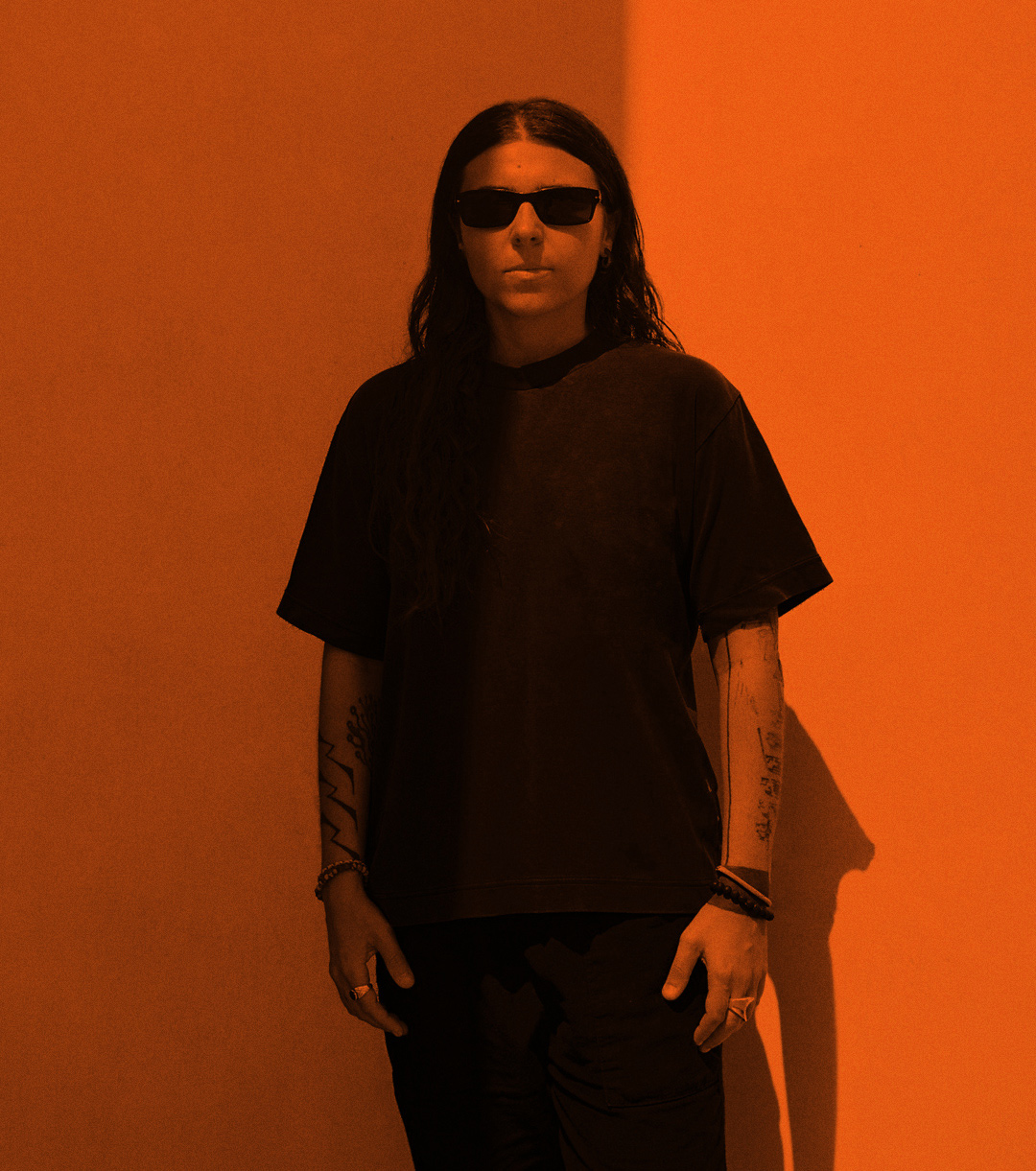
Mariachiara Troianiello, the Italian sound artist behind the moniker Katatonic Silentio, works at the crossroads of electronic music, performing arts and sound studies. Both as a performer and researcher, she bridges different spheres of sonic production. Active as a DJ for 20 years, her sets range from musique concrète and ambient to techno and drum'n'bass. As a composer, she explores the interplay between sound, space and the body in theatre and dance, while her research delves into the mythological origins and evolution of sound. She has performed at numerous festivals including Berlin Atonal, Draaimolen, Transart, New Now & Mutek, Jazz Is Dead, Paral·lel, Nextones, Meakusma, La Nature, Mostra, Fuori Festival & Festival Dei Due Mondi.
Her works have appeared at Triennale di Milano, Studio di Fonologia RAI di Milano, Asian Civilisations Museum in Singapore, and Museum Angewandte Kunst in Frankfurt. Her music is released on Delsin, Ilian Tape, Midnight Shift, Fleur Sauvage, and Die Orakel.
Could you share with us what mood or feeling guided you while putting this mix together?
I have attempted to remain true to the concept of sound as a tool for expanding consciousness, drawing on elements from traditions that have historically placed great importance on sound as a means of self-discovery and self-expansion.
Do you believe sound can function as a technology of consciousness?
Absolutely. If technology, by definition, is a tool that extends, modifies or enhances human capabilities, then sound can be considered as such. Just consider how it acts on both the body and mind (the physical body) and the energetic body (the subtle body) through the modulation of states of consciousness using frequencies, resonances and vibrations; through the exploration and activation of memories, and thus emotional triggers and storytelling; and through the extension of perception via acoustic ecology. There are numerous studies and research projects in the fields of neuroscience, music therapy and vibrational therapies that now demonstrate how sound vibrations act upon the various bodies. The term ‘technology’ makes us think of something new, digital, or high-tech, and it is directly linked to the issue of obsolescence – partly because specific technologies – that is, tools – emerge and develop in specific eras. Wheels and forks were once technologies; now they are simply everyday objects we’ve grown accustomed to (and so, obsolete, yet still very useful, hehe). If we return to the question of sound, singing too is a technology: the technology of the voice, one might call it. And this is one of the oldest sound technologies, an instrument of the human body used by many millennia-old spiritual traditions to heal, calm, awaken or expand inner awareness. A lullaby sung by a mother to her child to calm them is a technology of consciousness; a disturbing noise performance is a technology of consciousness; the sounds we find in nature are technologies of consciousness. Each with different characteristics, each with a specific function, but all acting upon visible and invisible bodies.
How important are accident and unpredictability in your creative process?
Quite significant. Let’s say that things that happen by chance usually have a positive effect on the creative process and on discovering new creative avenues. To achieve this, however, it is necessary to let go a little, step back from control, and set aside time for technical experimentation.
Do you consider psychoacoustics when working with distortion, space, or rhythmic tension?
Yes, especially when I work with space and tension, both in the rhythmic elements and in the processing of sounds. I try to strike a good balance between what can nourish both the body and the mind – which brings us back to the idea of sound as a technology of consciousness. So, between the simplicity and directness of a pure sound that hits you right in the gut, and the psychological effects it creates.
When does a sound feel "finished" to you? Is it a technical decision or a gut feeling?
A mix of the two. This ties in with what I said earlier: a good balance between a sound that resonates physically and stirs the emotions, yet still sounds good and meets certain (largely personal) technical criteria. For me, it’s a bit like a dance: making more polished, high-tech elements coexist and dance together within the soundscape alongside rougher elements that are more emotionally engaging.
Are there any visual arts or books that have really influenced your artistic vision?
Rather than the visual arts, I’d say books: philosophy, religion, music in general, but also sound technology. The essential titles are The Mysticism of Sound; the books by Marius Schneider, Curtis Roads, Murray Schaeffer and David Toop; Michael Nyman’s Experimental Music; Hazrat Inayat Khan’s The Mysticism of Sound; Franco Battiato’s L’Essenza; and Sinead O’Connor’s (auto)biography.
C R E D I T S
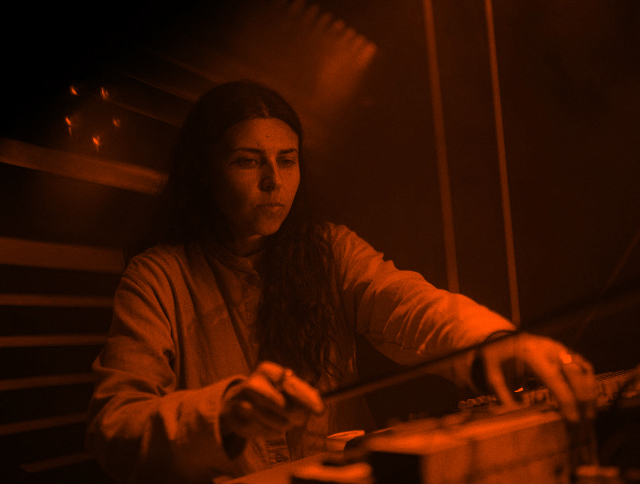
Photo 1: Le Motel
Photo 2: Kevin Rashid Giaquinto
T R A C K L I S T
Kudsi Erguner & Suleyman Erguner - Wordless prayer
The Sufi Choir - The Soul's Song to Itself
Stephan Micus - Behind Eleven Deserts
The Gurdjieff Folk Instruments Ensemble & Levon Eskenian - Zulo
Geir Jenssen - Jobo Rabzang
Qwerteest - Clouds
Driftmachine - Ashur
Jonathan Goldman - Ecstatic Sonics
Katatonic Silentio - El Baile de Ícaros
Two or The Dragon - Prelude for the Triumphant Man
Mariachiara Troianiello, the Italian sound artist behind the moniker Katatonic Silentio, works at the crossroads of electronic music, performing arts and sound studies. Both as a performer and researcher, she bridges different spheres of sonic production. Active as a DJ for 20 years, her sets range from musique concrète and ambient to techno and drum'n'bass. As a composer, she explores the interplay between sound, space and the body in theatre and dance, while her research delves into the mythological origins and evolution of sound. She has performed at numerous festivals including Berlin Atonal, Draaimolen, Transart, New Now & Mutek, Jazz Is Dead, Paral·lel, Nextones, Meakusma, La Nature, Mostra, Fuori Festival & Festival Dei Due Mondi.
Her works have appeared at Triennale di Milano, Studio di Fonologia RAI di Milano, Asian Civilisations Museum in Singapore, and Museum Angewandte Kunst in Frankfurt. Her music is released on Delsin, Ilian Tape, Midnight Shift, Fleur Sauvage, and Die Orakel.
Could you share with us what mood or feeling guided you while putting this mix together?
I have attempted to remain true to the concept of sound as a tool for expanding consciousness, drawing on elements from traditions that have historically placed great importance on sound as a means of self-discovery and self-expansion.
Do you believe sound can function as a technology of consciousness?
Absolutely. If technology, by definition, is a tool that extends, modifies or enhances human capabilities, then sound can be considered as such. Just consider how it acts on both the body and mind (the physical body) and the energetic body (the subtle body) through the modulation of states of consciousness using frequencies, resonances and vibrations; through the exploration and activation of memories, and thus emotional triggers and storytelling; and through the extension of perception via acoustic ecology. There are numerous studies and research projects in the fields of neuroscience, music therapy and vibrational therapies that now demonstrate how sound vibrations act upon the various bodies. The term ‘technology’ makes us think of something new, digital, or high-tech, and it is directly linked to the issue of obsolescence – partly because specific technologies – that is, tools – emerge and develop in specific eras. Wheels and forks were once technologies; now they are simply everyday objects we’ve grown accustomed to (and so, obsolete, yet still very useful, hehe). If we return to the question of sound, singing too is a technology: the technology of the voice, one might call it. And this is one of the oldest sound technologies, an instrument of the human body used by many millennia-old spiritual traditions to heal, calm, awaken or expand inner awareness. A lullaby sung by a mother to her child to calm them is a technology of consciousness; a disturbing noise performance is a technology of consciousness; the sounds we find in nature are technologies of consciousness. Each with different characteristics, each with a specific function, but all acting upon visible and invisible bodies.
How important are accident and unpredictability in your creative process?
Quite significant. Let’s say that things that happen by chance usually have a positive effect on the creative process and on discovering new creative avenues. To achieve this, however, it is necessary to let go a little, step back from control, and set aside time for technical experimentation.
Do you consider psychoacoustics when working with distortion, space, or rhythmic tension?
Yes, especially when I work with space and tension, both in the rhythmic elements and in the processing of sounds. I try to strike a good balance between what can nourish both the body and the mind – which brings us back to the idea of sound as a technology of consciousness. So, between the simplicity and directness of a pure sound that hits you right in the gut, and the psychological effects it creates.
When does a sound feel "finished" to you? Is it a technical decision or a gut feeling?
A mix of the two. This ties in with what I said earlier: a good balance between a sound that resonates physically and stirs the emotions, yet still sounds good and meets certain (largely personal) technical criteria. For me, it’s a bit like a dance: making more polished, high-tech elements coexist and dance together within the soundscape alongside rougher elements that are more emotionally engaging.
Are there any visual arts or books that have really influenced your artistic vision?
Rather than the visual arts, I’d say books: philosophy, religion, music in general, but also sound technology. The essential titles are The Mysticism of Sound; the books by Marius Schneider, Curtis Roads, Murray Schaeffer and David Toop; Michael Nyman’s Experimental Music; Hazrat Inayat Khan’s The Mysticism of Sound; Franco Battiato’s L’Essenza; and Sinead O’Connor’s (auto)biography.
C R E D I T S
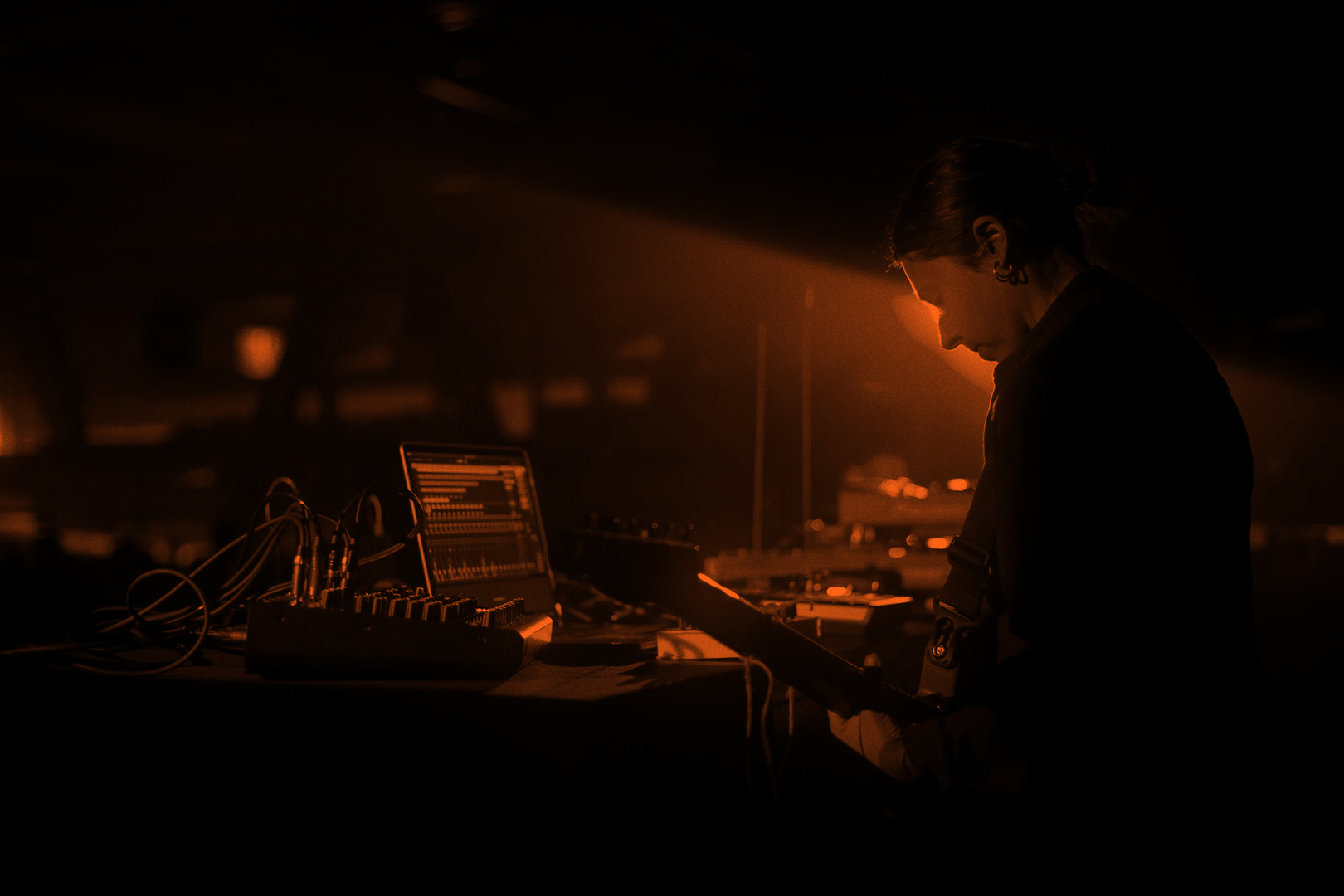
Photo 1: Le Motel
Photo 2: Kevin Rashid Giaquinto
T R A C K L I S T
Kudsi Erguner & Suleyman Erguner - Wordless prayer
The Sufi Choir - The Soul's Song to Itself
Stephan Micus - Behind Eleven Deserts
The Gurdjieff Folk Instruments Ensemble & Levon Eskenian - Zulo
Geir Jenssen - Jobo Rabzang
Qwerteest - Clouds
Driftmachine - Ashur
Jonathan Goldman - Ecstatic Sonics
Katatonic Silentio - El Baile de Ícaros
Two or The Dragon - Prelude for the Triumphant Man