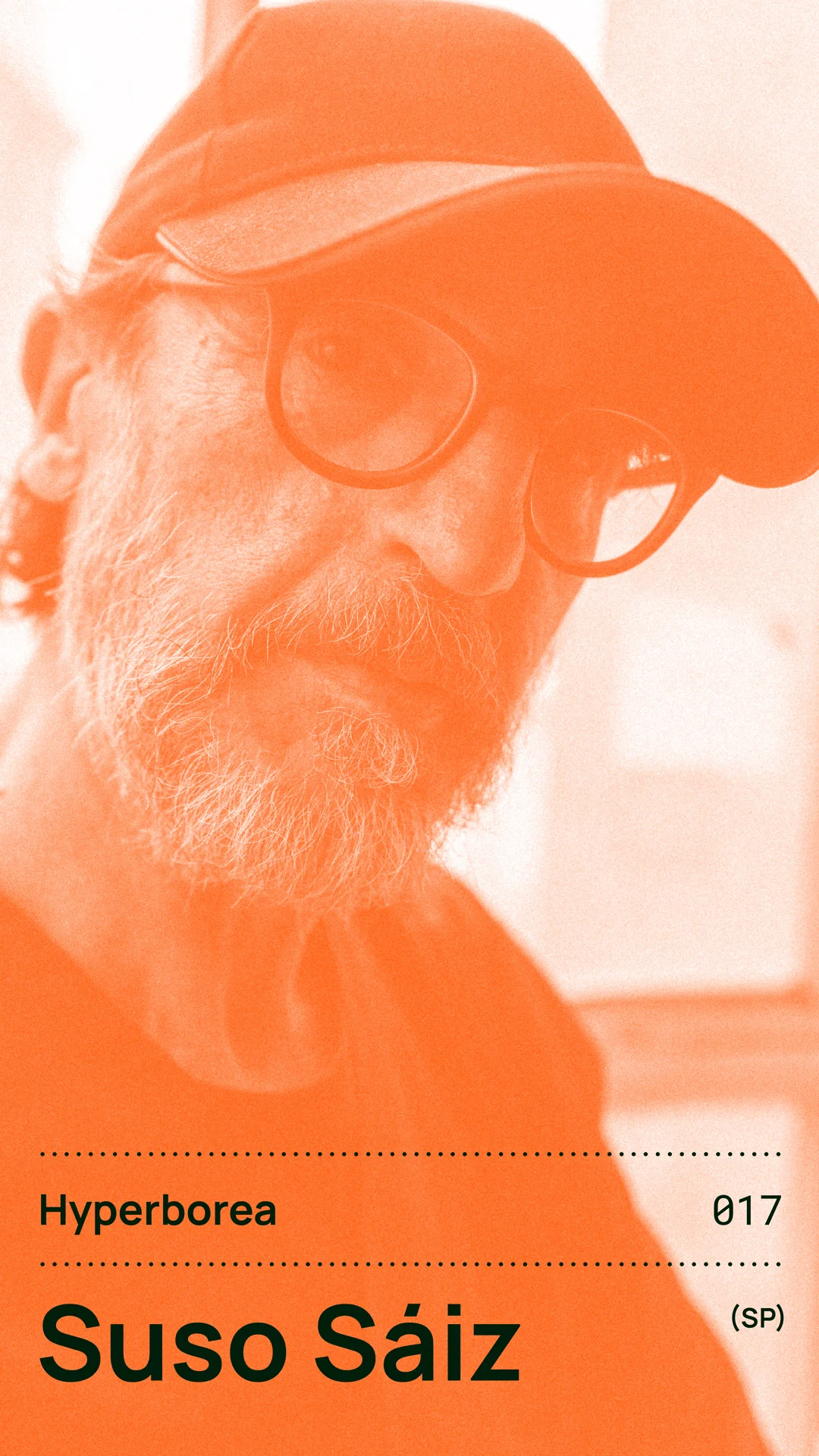
Suso Sáiz has been at the forefront of Spain's experimental music scene since the late 1970s, a multi-instrumentalist who formed the pivotal group Orquesta de las Nubes along with studio projects Música Esporádica, Suspended Memories and Trash of Dreams. His work has evolved towards the creation of textures based on processes over acoustic elements and soundscapes, with no synthesizers or electronic automatisms in his sound. A prolific producer, he has recorded with Spain's most singular popular musicians as well as luminary electronic and world music artists including Steve Roach, Jorge Reyes, Salif Keita, Christian Fennesz, Gigi Masin, Suzanne Kraft and Glen Velez, and many others.
Sáiz's universe remains in constant mutation, one that emphasizes time above all else, with radiant drones that are a nest of hidden feelings, glistening with complex emotions and textures, teasing out moods of vulnerability and hope. Dutch label Music From Memory has released his latest works, including Rainworks, Nothing Is Objective, Resonant Bodies, Distorted Clamor and the retrospective Odisea, and most recently MADAY, a limited edition work created with the sounds of the Tajogaite volcano eruption in La Palma, Canary Islands.
Could you share with us what mood or feeling guided you while putting this mix together?
To tell the truth, I put this session together as my departure date for a tour of Japan and Korea was approaching. The preparations for that tour certainly interfered with the process. In any case, I’m trying to express a sense of calm agitation and diversity.
You’ve identified the 'need for success' as the main enemy of creativity. In an era where visibility is often mistaken for value, how vital is it for a musician to protect their authentic path from this poison?
From my point of view, it is absolutely essential. The idea of tying yourself to a single moment in your life (success) and having your work revolve around it—thereby limiting the free development of your potential growth and, by extension, the evolution of your work—strikes me as terrifying.
How do you decide on your live setup for each show, and to what extent do the environment or the audience dictate your choices?
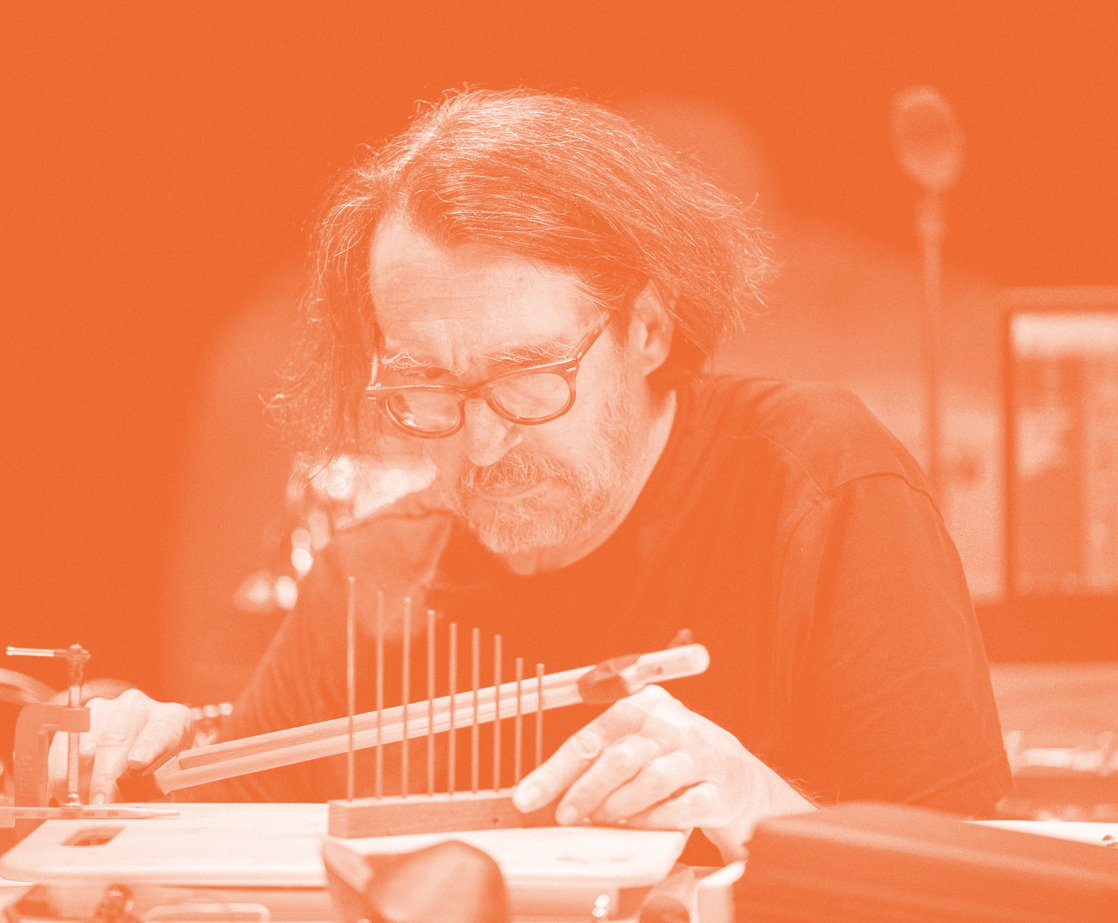
Let's say there are the typical concerts on a tour where there aren't usually any predetermined specifications regarding the venue or the type of audience. If I have those specifications in advance, I usually adjust my setup accordingly. In any case, I tend to use a setup that allows me to adapt to a wide variety of concert types, within an increasingly defined range of the sounds I work with.
After decades of production, what does a truly efficient workflow look like for you today?
Given that I work an average of 6 to 7 hours every day—experimenting, exploring, reflecting, and playing with sound—my workflow is constant. I can’t imagine creating a specific type of work without spending countless hours reflecting on and working on it.
Are there any visual arts or books that have really influenced your artistic vision?
A great many. I enjoy contemplating any form of art. I’m sure many of them have had a profound influence on me, but I don’t feel qualified to list them.
What is your biggest motivation and greatest reward for staying consistent as a musician and continuing to produce material? What do you think will keep you going for a long time to come?
I continue to dream and imagine timbre and sounds. The pursuit of those dreams and the attempt to bring to the reality what I hear in my mind are a need that remains strong and constant.
C R E D I T S
Photos 1 & 2: Adriana Roslin
Photo 3: Sergo Méndez
T R A C K L I S T
Suso Sáiz has been at the forefront of Spain's experimental music scene since the late 1970s, a multi-instrumentalist who formed the pivotal group Orquesta de las Nubes along with studio projects Música Esporádica, Suspended Memories and Trash of Dreams. His work has evolved towards the creation of textures based on processes over acoustic elements and soundscapes, with no synthesizers or electronic automatisms in his sound. A prolific producer, he has recorded with Spain's most singular popular musicians as well as luminary electronic and world music artists including Steve Roach, Jorge Reyes, Salif Keita, Christian Fennesz, Gigi Masin, Suzanne Kraft and Glen Velez, and many others.
Sáiz's universe remains in constant mutation, one that emphasizes time above all else, with radiant drones that are a nest of hidden feelings, glistening with complex emotions and textures, teasing out moods of vulnerability and hope. Dutch label Music From Memory has released his latest works, including Rainworks, Nothing Is Objective, Resonant Bodies, Distorted Clamor and the retrospective Odisea, and most recently MADAY, a limited edition work created with the sounds of the Tajogaite volcano eruption in La Palma, Canary Islands.
Could you share with us what mood or feeling guided you while putting this mix together?
To tell the truth, I put this session together as my departure date for a tour of Japan and Korea was approaching. The preparations for that tour certainly interfered with the process. In any case, I’m trying to express a sense of calm agitation and diversity.
You’ve identified the 'need for success' as the main enemy of creativity. In an era where visibility is often mistaken for value, how vital is it for a musician to protect their authentic path from this poison?
From my point of view, it is absolutely essential. The idea of tying yourself to a single moment in your life (success) and having your work revolve around it—thereby limiting the free development of your potential growth and, by extension, the evolution of your work—strikes me as terrifying.
How do you decide on your live setup for each show, and to what extent do the environment or the audience dictate your choices?
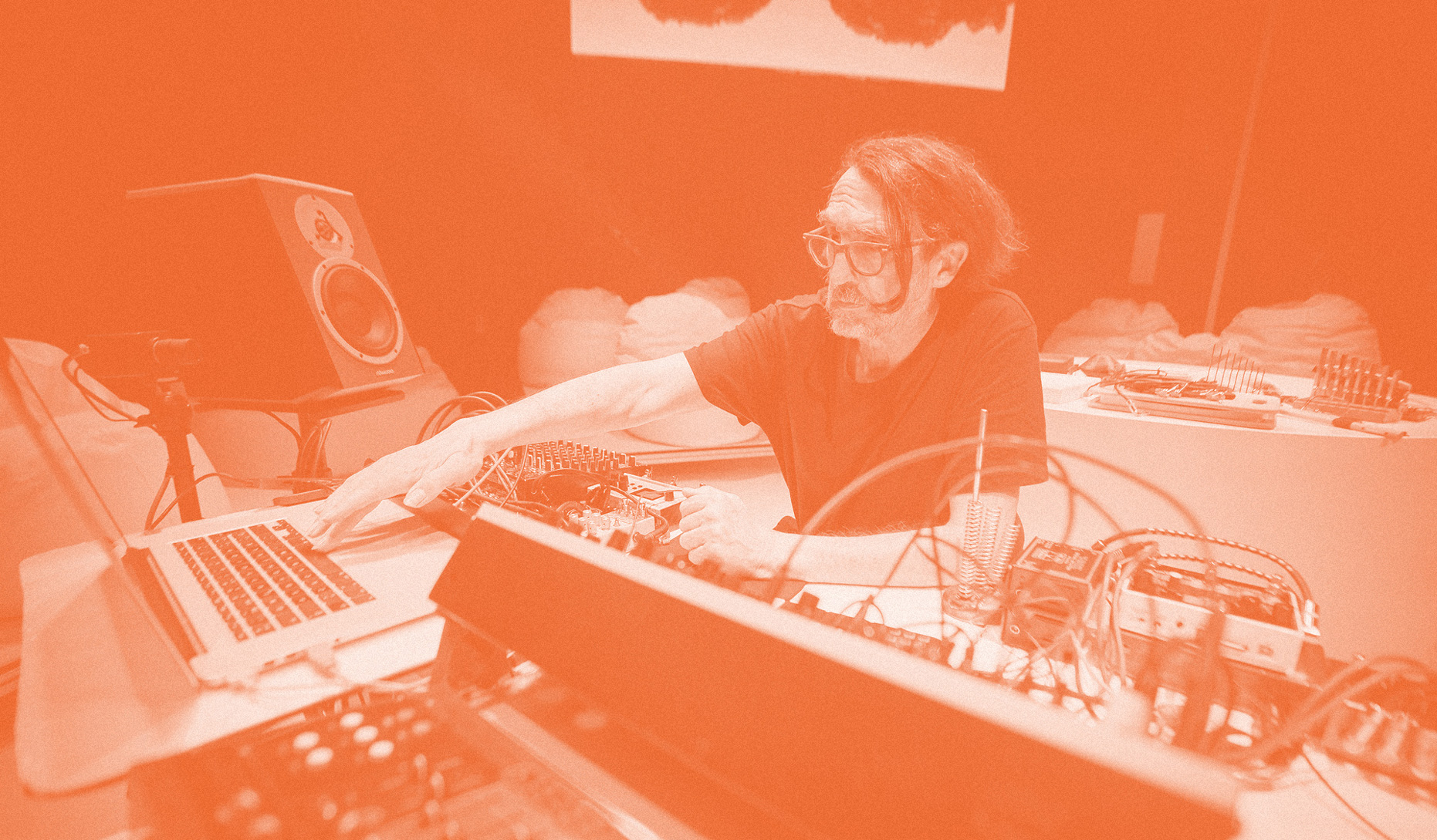
Let's say there are the typical concerts on a tour where there aren't usually any predetermined specifications regarding the venue or the type of audience. If I have those specifications in advance, I usually adjust my setup accordingly. In any case, I tend to use a setup that allows me to adapt to a wide variety of concert types, within an increasingly defined range of the sounds I work with.
After decades of production, what does a truly efficient workflow look like for you today?
Given that I work an average of 6 to 7 hours every day—experimenting, exploring, reflecting, and playing with sound—my workflow is constant. I can’t imagine creating a specific type of work without spending countless hours reflecting on and working on it.
Are there any visual arts or books that have really influenced your artistic vision?
A great many. I enjoy contemplating any form of art. I’m sure many of them have had a profound influence on me, but I don’t feel qualified to list them.
What is your biggest motivation and greatest reward for staying consistent as a musician and continuing to produce material? What do you think will keep you going for a long time to come?
I continue to dream and imagine timbre and sounds. The pursuit of those dreams and the attempt to bring to the reality what I hear in my mind are a need that remains strong and constant.
C R E D I T S
Photos 1 & 2: Adriana Roslin
Photo 3: Sergo Méndez
T R A C K L I S T