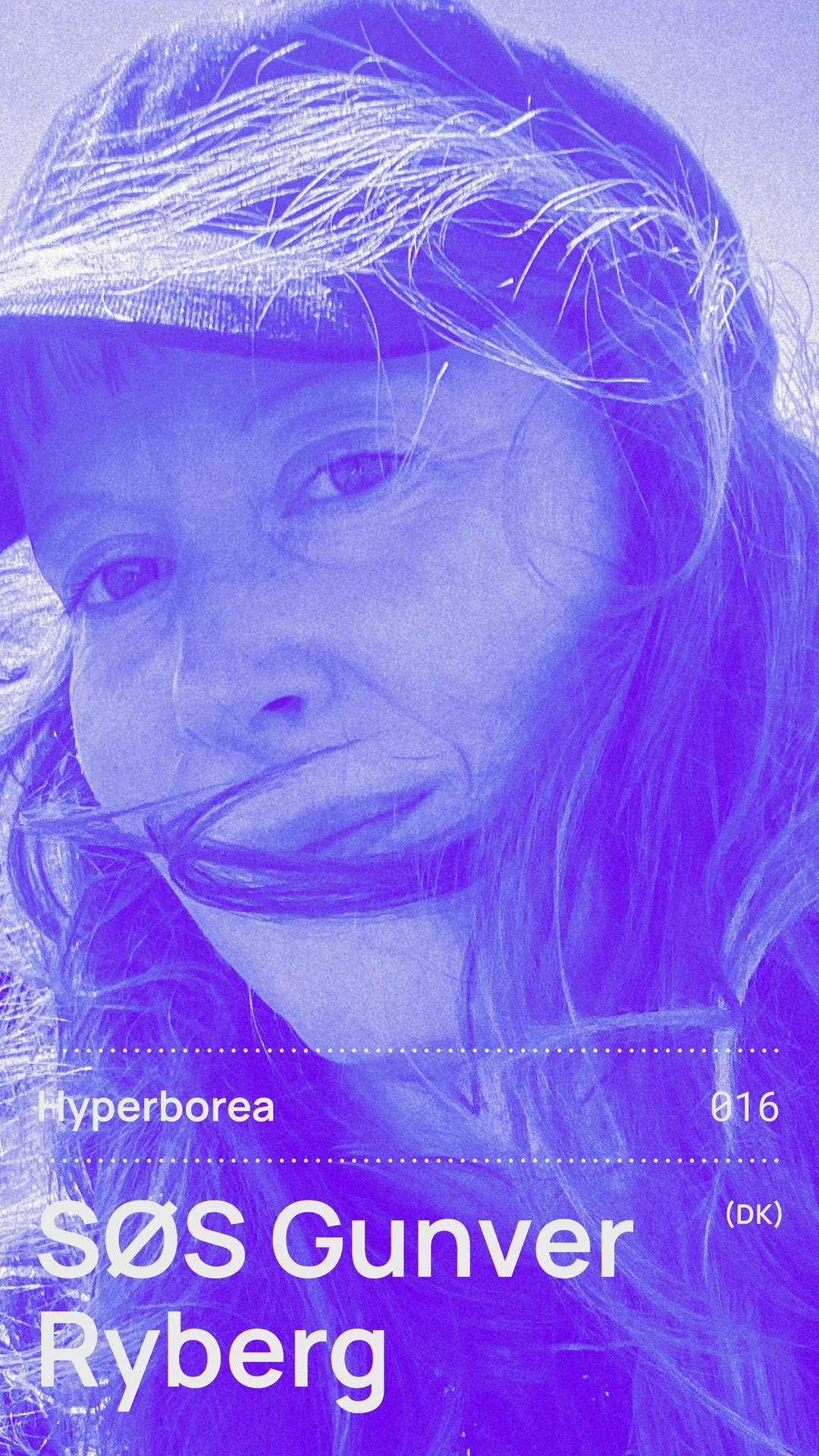
SØS Gunver Ryberg is an electronic composer and sound artist known for her innovative music, which challenges traditional genre definitions. She performs in settings ranging from art spaces and museums to concert venues, concert halls, underground clubs and festivals internationally, including the Venice Biennale, Berlin Philharmonie, Flow Festival, CTM Festival, Berlin Atonal, Istanbul Biennale, Berghain and the Corsica Studios. Alongside concerts and releases, she frequently composes for immersive and spatial formats, including multichannel works, installations, opera, orchestras, dance, performance and VR/AR and has received several awards for her music.
With uncompromising intensity, she transforms the listener's experience and opens perception towards new dimensions. Her music is characterised by powerful and complex timbres, textures and rhythms that intertwine in an expression that feels both futuristic and timeless, fearlessly engaging with the present while opening perspectives towards an unknown future.
Could you share with us what mood or feeling guided you while putting this mix together?
I wanted the mix to move through different states without settling too comfortably into one particular mood or genre. What guided my mix is how sound can change our experience of time, space and perception, and in sounds that seem to have their own internal life shifting between something carefully constructed and something on the verge of falling apart. Many of the sound artists, producers and composers in the mix exist somewhere between experimental electronic music, club culture, contemporary composition and sound art. I’ve always been drawn to the point where those worlds overlap. Making a mix is also a process of discovery for me. I often begin with a few tracks or artists I already have a connection to, but while searching for relationships between them, I come across music I didn’t know before. One track leads to another, which can take me towards an artist I hadn’t encountered. That process becomes part of the composition of the mix itself.
What is the most efficient way to create and produce new music at this time? Could you share with us what workflow has worked best for you?
I'm often working under deadlines, but I can't think about efficiency when I'm composing. I need to feel free, almost as if I'm outside of time. For me, that freedom is also a mindset. It doesn't necessarily mean having unlimited time or working without a deadline. It's about creating a mental space where, for a while, the deadline doesn't exist. That's when ideas begin to emerge and the work starts to flow. We live in a culture where everything is expected to be efficient, productive and measurable, but that's almost the opposite of what creativity needs. For me creativity can't be rushed or forced into a predefined system. It needs openness, uncertainty and the freedom to explore without knowing exactly where you're going. Some of the most important discoveries happen through detours, mistakes or ideas that initially seem to lead nowhere. If I'm too focused on being efficient, I stop listening and simply start producing. My workflow is constantly changing. Every project demands its own process. Recently I've been combining electronics with orchestra and opera, and those projects required me to invent completely new ways of composing and collaborating. Let the process evolve together with the music, rather than forcing the music into an existing workflow. At the same time, regular composing/producing is important to me. Freedom doesn't mean waiting for inspiration. There are days when making music can also feel uncomfortable, when nothing seems to work. I've learned that it's important to stay with that discomfort and continue. You don’t always know when something meaningful will appear.
How do you protect your personal creative voice from the noise of current trends and external expectations?
I don't really think about protecting my creative voice. I follow ideas that genuinely interest me, even if they take years to mature. I'll pursue it regardless of what is happening around me at that moment. There's a thread running through all of my work. As long as I stay connected to that thread, I don't worry too much about what's happening around me. There's always noise around you as expectations, opinions and trends. For me, the important thing is to create enough space and silence around the work so I hear my own musical voice. I also think a personal voice needs to be allowed to change. I don't want to preserve a fixed version of myself or repeat something simply because it has become recognisable as "my sound". Staying curious sometimes means moving away from what you already know how to do.
How much does the physical architecture and the specific acoustics of a location dictate the final form of your performance?
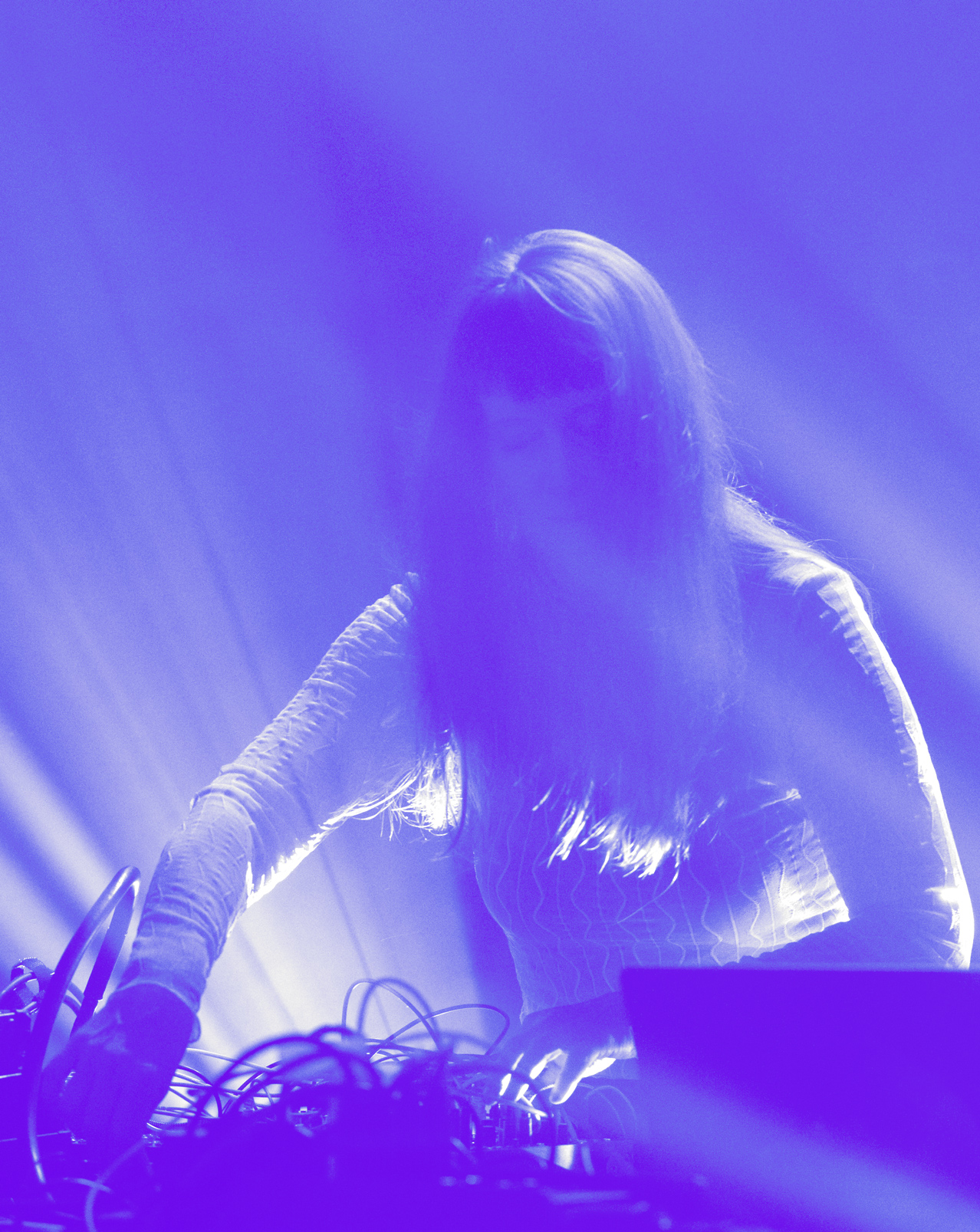
In concerts the acoustics often inspire me. I think of space as another instrument. Every room has its own resonances, reflections and energy, and those qualities will become part of the performance/composition. This also means that a performance is never completely fixed. I may work with the same material in different locations, but its balance, intensity, pacing and spatial qualities can change considerably. The architecture, the sound system, the acoustics, the audience and my own decisions during the performance all become part of the work. I’m also interested in site-specific work, where the relationship between sound and architecture is present from the beginning of the compositional process. I recently composed music for an opera where the overture was transmitted through large metal plates suspended from the ceiling, using transducers to turn the plates themselves into resonating surfaces. The sound was therefore not simply played in the architecture. The physical material of the installation became part of the instrument. The composition developed in response to those conditions. The resonance of the metal, the acoustics of the space and the way the sound travelled through the room affected the musical decisions I made. I find that relationship fascinating because you are no longer composing only with notes, frequencies or electronic processes. You are composing with materials, architecture, distance and the physical behaviour of sound. For me, space isn't something that surrounds the music after it has been made. It can be part of the material from which the music is made.
In your live sets, how much space do you leave for the "unpredictable" to take over the performance?
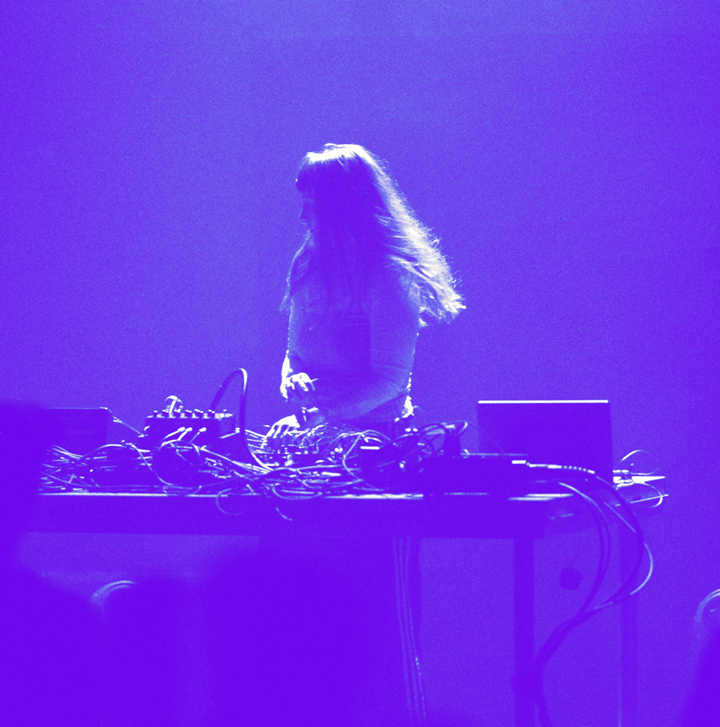
It varies from performance to performance. Some sets are quite carefully prepared, but I never want to simply reproduce the same performance every time. I'm interested in working at the edge of control. I like to construct a framework that gives the performance a direction, while leaving parts like I don't know exactly what will happen. That unpredictability might come from improvisation, the interaction between different processes, or simply from pushing a sound until it starts behaving differently from what I expected. It's more about creating conditions where something can happen that I couldn't have completely planned in advance. It requires listening and making decisions in the moment. There's a certain risk in that, and I think that's important in a live performance. If I know exactly what is going to happen from beginning to end, I can lose some of the intensity of being present. Some of the most memorable moments happen when something shifts and suddenly the performance starts moving in a direction I hadn't imagined. I like having enough control to shape the overall form, but not so much that I already know all the outcome.
Are there any visual arts or books that have really influenced your artistic vision?
My influences have often come from outside music. Performance art, installation art, visual art and film shaped the way I thought about sound long before I considered myself a composer. In the 1990s, I encountered forms of performance and installation art that had a lasting impact on me. I remember experiencing Cantabile's Dantes Helvede, as well as performances by La Fura dels Baus and Teatro de los Sentidos at festivals in Denmark. These works changed me. I've also been strongly influenced by artistic movements such as Surrealism, the avant-garde, Expressionism and abstraction. I'm drawn to them because they move away from literal representation and allow emotion, perception and the subconscious to shape the work. They create realities that can be distorted, fragmented or unfamiliar, while still touching something deeply human. There is also something fundamental to me in the avant-garde idea of questioning established forms and crossing boundaries between disciplines. I have never been particularly interested in whether something belongs clearly to music, performance, installation or another form. I'm more interested in what the work does to you. Film is another influence, particularly David Lynch. I'm drawn to the way he uses sound to destabilise seemingly ordinary situations and create a psychological reality beneath the visible one. The familiar becomes strange, and you are not always given an explanation for what you are experiencing. I find that uncertainty very powerful. I love leaving a work and finding that the world outside feels slightly different from the one I entered with. That's something I hope to create with sound as well.
C R E D I T S
Photos 2 & 3: Daniel Jarosch
T R A C K L I S T
Vladislav Delay – Lawless World (Numer)
Datassette – Re-evaluate Your Priorities
Carrier – Light Candles, To Mark The Way
Space Afrika – <>
SHXCXCHCXSH – AOE
Gabber Modus Operandi – Hey Nafsu
Loraine James – The Book of Self Doubt
Band Ane – Éliane
SØS Gunver Ryberg – Unfolding
Bernard Parmegiani – Question de Temps
Carmen Villain – Entre Nosotros
Flora Yin-Wong – Vittore al Corpo
rRoxymore – Lows and Attractions
Azu Tiwaline – Reptilian Waves
Aho Ssan – 100 Suns, Pt. IV
Natasha Barrett – Toxic Colour
Hatis Noit – Aura
Cristián Vogel – Dual
SØS Gunver Ryberg is an electronic composer and sound artist known for her innovative music, which challenges traditional genre definitions. She performs in settings ranging from art spaces and museums to concert venues, concert halls, underground clubs and festivals internationally, including the Venice Biennale, Berlin Philharmonie, Flow Festival, CTM Festival, Berlin Atonal, Istanbul Biennale, Berghain and the Corsica Studios. Alongside concerts and releases, she frequently composes for immersive and spatial formats, including multichannel works, installations, opera, orchestras, dance, performance and VR/AR and has received several awards for her music.
With uncompromising intensity, she transforms the listener's experience and opens perception towards new dimensions. Her music is characterised by powerful and complex timbres, textures
and rhythms that intertwine in an expression that feels both futuristic and timeless, fearlessly
engaging with the present while opening perspectives towards an unknown future.
Could you share with us what mood or feeling guided you while putting this mix together?
I wanted the mix to move through different states without settling too comfortably into one particular mood or genre. What guided my mix is how sound can change our experience of time, space and perception, and in sounds that seem to have their own internal life shifting between something carefully constructed and something on the verge of falling apart. Many of the sound artists, producers and composers in the mix exist somewhere between experimental electronic music, club culture, contemporary composition and sound art. I’ve always been drawn to the point where those worlds overlap. Making a mix is also a process of discovery for me. I often begin with a few tracks or artists I already have a connection to, but while searching for relationships between them, I come across music I didn’t know before. One track leads to another, which can take me towards an artist I hadn’t encountered. That process becomes part of the composition of the mix itself.
What is the most efficient way to create and produce new music at this time? Could you share with us what workflow has worked best for you?
I'm often working under deadlines, but I can't think about efficiency when I'm composing. I need to feel free, almost as if I'm outside of time. For me, that freedom is also a mindset. It doesn't necessarily mean having unlimited time or working without a deadline. It's about creating a mental space where, for a while, the deadline doesn't exist. That's when ideas begin to emerge and the work starts to flow. We live in a culture where everything is expected to be efficient, productive and measurable, but that's almost the opposite of what creativity needs. For me creativity can't be rushed or forced into a predefined system. It needs openness, uncertainty and the freedom to explore without knowing exactly where you're going. Some of the most important discoveries happen through detours, mistakes or ideas that initially seem to lead nowhere. If I'm too focused on being efficient, I stop listening and simply start producing. My workflow is constantly changing. Every project demands its own process. Recently I've been combining electronics with orchestra and opera, and those projects required me to invent completely new ways of composing and collaborating. Let the process evolve together with the music, rather than forcing the music into an existing workflow. At the same time, regular composing/producing is important to me. Freedom doesn't mean waiting for inspiration. There are days when making music can also feel uncomfortable, when nothing seems to work. I've learned that it's important to stay with that discomfort and continue. You don’t always know when something meaningful will appear.
How do you protect your personal creative voice from the noise of current trends and external expectations?
I don't really think about protecting my creative voice. I follow ideas that genuinely interest me,
even if they take years to mature. I'll pursue it regardless of what is happening around me at
that moment. There's a thread running through all of my work. As long as I stay connected to that thread, I
don't worry too much about what's happening around me. There's always noise around you as
expectations, opinions and trends. For me, the important thing is to create enough space and silence around the work so I hear my own musical voice. I also think a personal voice needs to be allowed to change. I don't want to
preserve a fixed version of myself or repeat something simply because it has become recognisable as "my sound". Staying curious sometimes means moving away from what you already know how to do.
How much does the physical architecture and the specific acoustics of a location dictate the final form of your performance?
In concerts the acoustics often inspire me. I think of space as another instrument. Every room has its own resonances, reflections and energy, and those qualities will become part of the performance/composition. This also means that a performance is never completely fixed. I may work with the same material in different locations, but its balance, intensity, pacing and spatial qualities can change considerably. The architecture, the sound system, the acoustics, the audience and my own decisions during the performance all become part of the work. I’m also interested in site-specific work, where the relationship between sound and architecture is present from the beginning of the compositional process. I recently composed music for an opera where the overture was transmitted through large metal plates suspended from the ceiling, using transducers to turn the plates themselves into resonating surfaces. The sound was therefore not simply played in the architecture. The physical material of the installation became part of the instrument. The composition developed in response to those conditions. The resonance of the metal, the acoustics of the space and the way the sound travelled through the room affected the musical decisions I made. I find that relationship fascinating because you are no longer composing only with notes, frequencies or electronic processes. You are composing with materials, architecture, distance and the physical behaviour of sound. For me, space isn't something that surrounds the music after it has been made. It can be part of the material from which the music is made.
In your live sets, how much space do you leave for the "unpredictable" to take over the performance?
It varies from performance to performance. Some sets are quite carefully prepared, but I never want to simply reproduce the same performance every time. I'm interested in working at the edge of control. I like to construct a framework that gives the performance a direction, while leaving parts like I don't know exactly what will happen. That unpredictability might come from improvisation, the interaction between different processes, or simply from pushing a sound until it starts behaving differently from what I expected. It's more about creating conditions where something can happen that I couldn't have completely planned in advance. It requires listening and making decisions in the moment. There's a certain risk in that, and I think that's important in a live performance. If I know exactly what is going to happen from beginning to end, I can lose some of the intensity of being present. Some of the most memorable moments happen when something shifts and suddenly the performance starts moving in a direction I hadn't imagined. I like having enough control to shape the overall form, but not so much that I already know all the outcome.
Are there any visual arts or books that have really influenced your artistic vision?
My influences have often come from outside music. Performance art, installation art, visual art and film shaped the way I thought about sound long before I considered myself a composer. In the 1990s, I encountered forms of performance and installation art that had a lasting impact on me. I remember experiencing Cantabile's Dantes Helvede, as well as performances by La Fura dels Baus and Teatro de los Sentidos at festivals in Denmark. These works changed me. I've also been strongly influenced by artistic movements such as Surrealism, the avant-garde, Expressionism and abstraction. I'm drawn to them because they move away from literal representation and allow emotion, perception and the subconscious to shape the work. They create realities that can be distorted, fragmented or unfamiliar, while still touching something deeply human. There is also something fundamental to me in the avant-garde idea of questioning established forms and crossing boundaries between disciplines. I have never been particularly interested in whether something belongs clearly to music, performance, installation or another form. I'm more interested in what the work does to you. Film is another influence, particularly David Lynch. I'm drawn to the way he uses sound to destabilise seemingly ordinary situations and create a psychological reality beneath the visible one. The familiar becomes strange, and you are not always given an explanation for what you are experiencing. I find that uncertainty very powerful. I love leaving a work and finding that the world outside feels slightly different from the one I entered with. That's something I hope to create with sound as well.
C R E D I T S
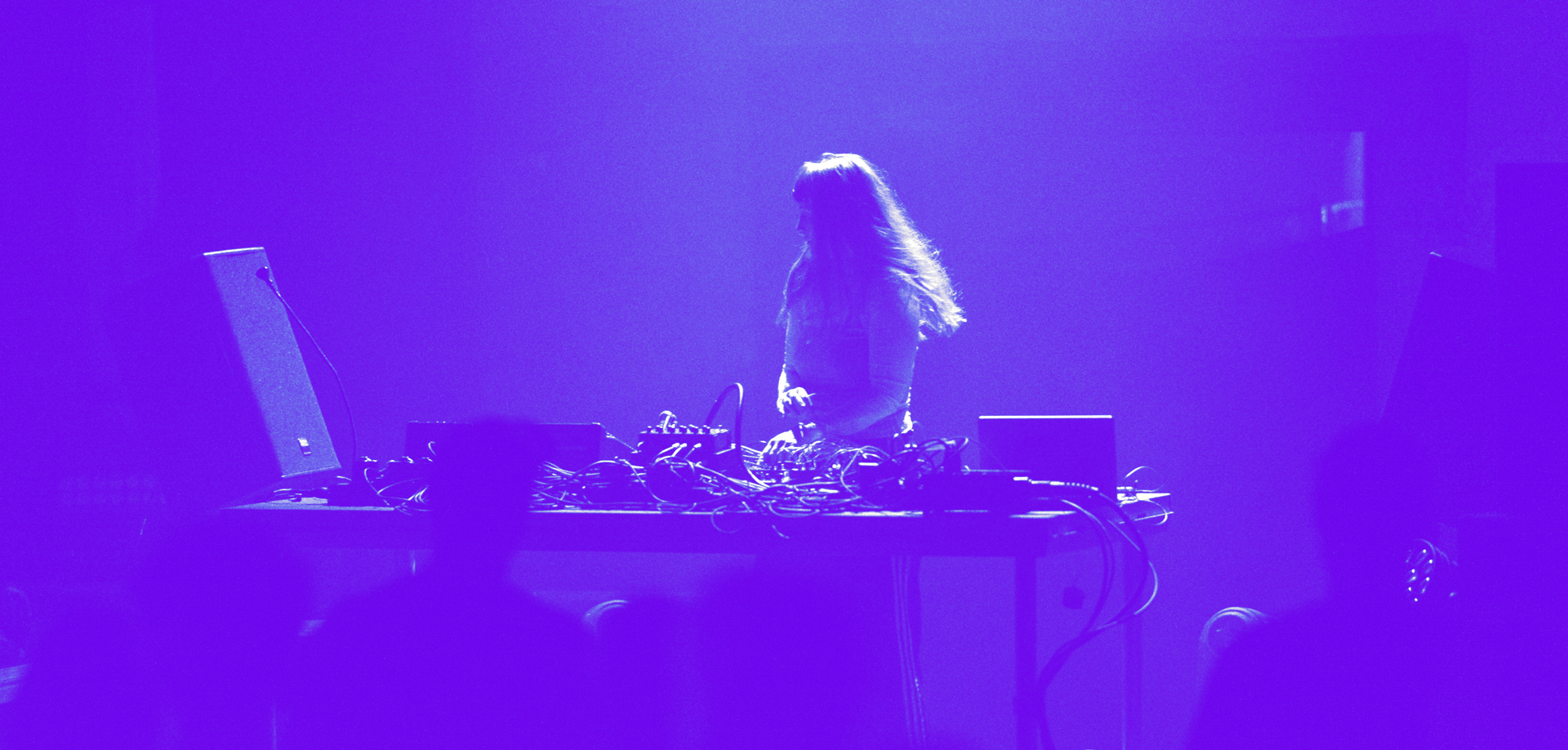
Photos 2 & 3: Daniel Jarosch
T R A C K L I S T
Vladislav Delay – Lawless World (Numer)
Datassette – Re-evaluate Your Priorities
Carrier – Light Candles, To Mark The Way
Space Afrika – <>
SHXCXCHCXSH – AOE
Gabber Modus Operandi – Hey Nafsu
Loraine James – The Book of Self Doubt
Band Ane – Éliane
SØS Gunver Ryberg – Unfolding
Bernard Parmegiani – Question de Temps
Carmen Villain – Entre Nosotros
Flora Yin-Wong – Vittore al Corpo
rRoxymore – Lows and Attractions
Azu Tiwaline – Reptilian Waves
Aho Ssan – 100 Suns, Pt. IV
Natasha Barrett – Toxic Colour
Hatis Noit – Aura
Cristián Vogel – Dual