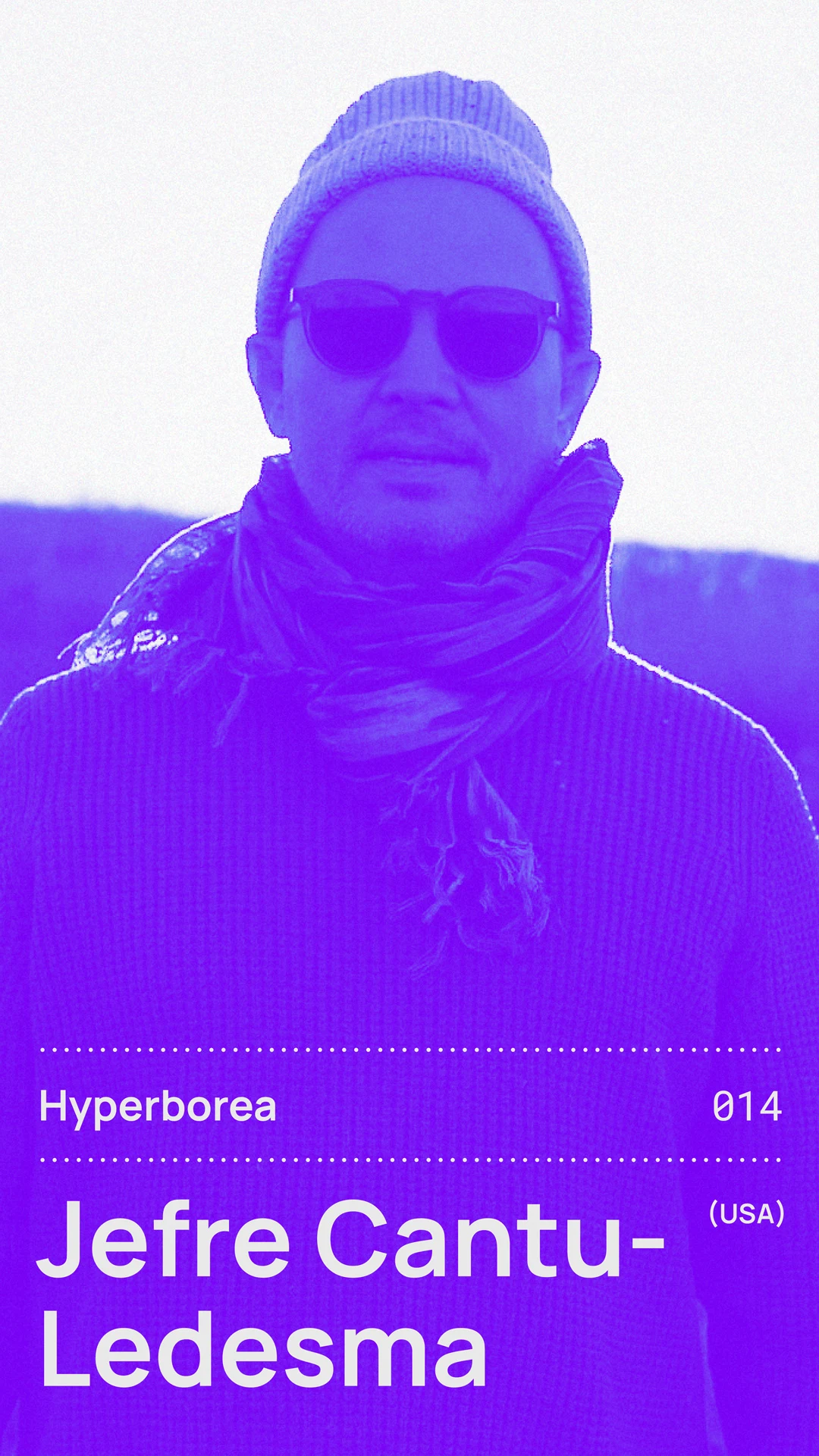
Jefre Cantu-Ledesma is a Texas-born and Hudson Valley, New York-based multi-instrumentalist and composer. A purveyor of deeply emotive ambient and experimental sound, he has been a pillar of the American music underground for the past three decades. His first foray into music was as a founding member of the experimental post-rock outfit Tarentel during the mid-1990s. Following the demise of Tarentel, he expanded his sonic vocabulary within The Alps, Raum (a duo with Liz Harris / Grouper), and numerous other projects, while accumulating a distinguished catalog of solo work marked by a profound sensitivity to sonority and meaning, including acclaimed Mexican Summer releases like A Year With 13 Moons (2015) and On The Echoing Green (2017).
An artist for whom the boundaries between life and art eternally blur, Cantu-Ledesma’s holistic approach to sound balances warmth, intimacy, and a sense of humanity with the creatively and conceptually profound. His practice is equally informed and guided by his parallel roles as a Zen priest, hospice chaplain, and ceramist, alongside observations of the natural environment that he calls home. Embracing openness and chance, he blends a rich sonic palette of guitar, modular synthesizer, and acoustic instrumentation into shimmering meditations. The result is a deeply organic and introspective form of minimalism, producing elegant states of refinement and ambient grace that dance outside of time and space.
Could you share with us what mood or feeling guided you while putting this mix together?
Typically I just find a first track that I think feels like it’s the opening or beginning of something. In this case it’s ///// - then I just go from there. I try not to have too much of a plan in mind unless there are specific instructions, like “all piano music” for instance. So there is the first track then what I think feels like a good fit after it then so on.
September functions as a continuous hour-long sound bath. Practically speaking, how do you approach the pacing of such a long-form work to ensure the repetition feels like an evolving environment rather than just a loop?
I’m ok with it feeling like “just a loop. ” Loops can feel infinite, which is what I find interesting about using them as a compositional tool. September is in fact a number of loops, it’s just that they all have different lengths and start and stop at different points. But in terms of composing longer works I try to split them up into sections, and then have things shift to small or larger degrees within the various sections. So in September there are a few new loops introduced in the second half that, at least for me, give it a slightly different feel than the first half.
You’ve mentioned that out of hours of recording, only a tiny fraction feels worth sharing. Do you feel this heavy culling is an inseparable part of your process to reach a refined result?
Yes, absolutely. I’m not a songwriter, so for me a central feature of my creative process is to create a lot of work and see what goes together well, what makes sense as a whole object. Currently I’m working on my next full length record for Mexican Summer and with the other musicians I’m working with I’ve got something like three hours of material. Only 40 minutes of that will make it on to the record.
How important are accident and unpredictability in your creative process?
Very. That’s the whole point really. Putting different sounds / people / instruments together and seeing what happens.
Are there any visual arts or books that have really influenced your artistic vision?
Not specifically, but I would say I do feel inspired by the visual arts more than books or writing.
What is your biggest motivation and greatest reward for staying consistent as a musician and continuing to produce material? What do you think will keep you going for a long time to come?
Music is a practice for me, it’s something I do because I enjoy it and find it nourishing. I’m not a touring musician, I don’t make a living and don’t ever suspect I will. At this point it just feels so interwoven into my day to day life, that I can’t really imagine not doing it (although I do take breaks). I’ve often said that even if no one was listening I’d still just be up in my attic making music and occasionally playing with friends. I hope that’s true. I think it is!
C R E D I T S
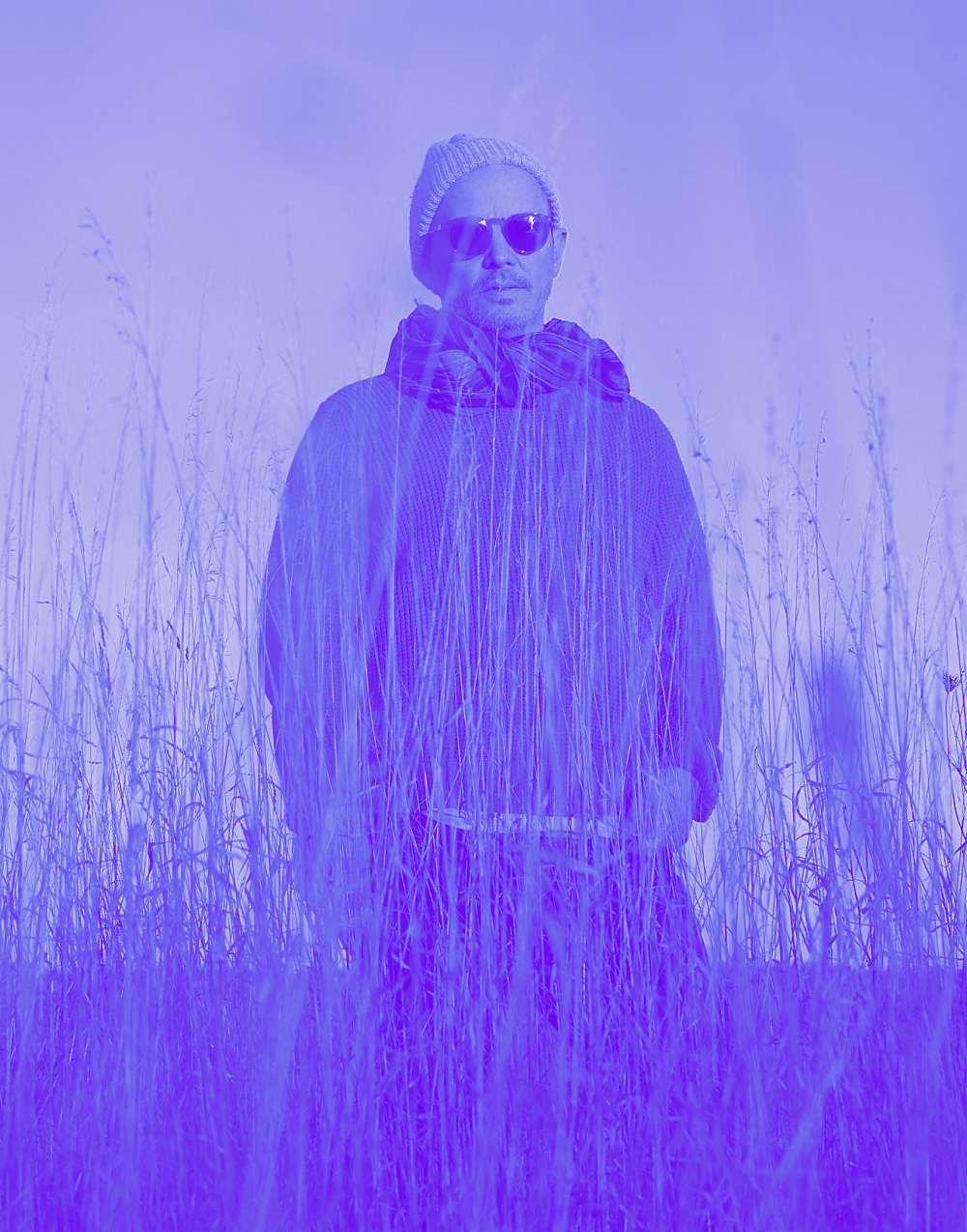
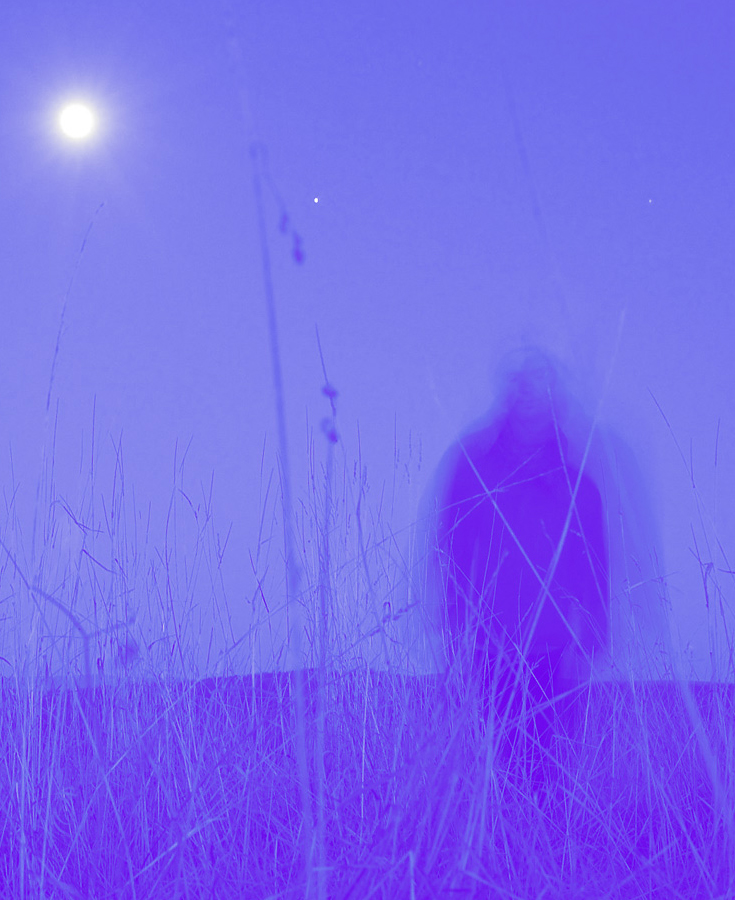
Photos: Brandon Schulman
T R A C K L I S T
Raphael Rogiński - Blue Train
Hans Reichel - Waiting (II)
Christer Bothén - Reh Chergi
Chantal Michelle - Breath Observation
(For Voice And Hand-Blown Glass Object)
Kali Malone + Drew McDowall - Nothing Here Is Lost
Judith Hamann - Seventeen Fabrics Of Measure
Cassandra Miller - Thanksong
Rafael Toral - God Bless the Child
James Hoff - Everything You Want Less Time
Jefre Cantu-Ledesma is a Texas-born and Hudson Valley, New York-based multi-instrumentalist and composer. A purveyor of deeply emotive ambient and experimental sound, he has been a pillar of the American music underground for the past three decades. His first foray into music was as a founding member of the experimental post-rock outfit Tarentel during the mid-1990s. Following the demise of Tarentel, he expanded his sonic vocabulary within The Alps, Raum (a duo with Liz Harris / Grouper), and numerous other projects, while accumulating a distinguished catalog of solo work marked by a profound sensitivity to sonority and meaning, including acclaimed Mexican Summer releases like A Year With 13 Moons (2015) and On The Echoing Green (2017).
An artist for whom the boundaries between life and art eternally blur, Cantu-Ledesma’s holistic approach to sound balances warmth, intimacy, and a sense of humanity with the creatively and conceptually profound. His practice is equally informed and guided by his parallel roles as a Zen priest, hospice chaplain, and ceramist, alongside observations of the natural environment that he calls home. Embracing openness and chance, he blends a rich sonic palette of guitar, modular synthesizer, and acoustic instrumentation into shimmering meditations. The result is a deeply organic and introspective form of minimalism, producing elegant states of refinement and ambient grace that dance outside of time and space.
Could you share with us what mood or feeling guided you while putting this mix together?
Typically I just find a first track that I think feels like it’s the opening or beginning of something. In this case it’s ///// - then I just go from there. I try not to have too much of a plan in mind unless there are specific instructions, like “all piano music” for instance. So there is the first track then what I think feels like a good fit after it then so on.
September functions as a continuous hour-long sound bath. Practically speaking, how do you approach the pacing of such a long-form work to ensure the repetition feels like an evolving environment rather than just a loop?
I’m ok with it feeling like “just a loop. ” Loops can feel infinite, which is what I find interesting about using them as a compositional tool. September is in fact a number of loops, it’s just that they all have different lengths and start and stop at different points. But in terms of composing longer works I try to split them up into sections, and then have things shift to small or larger degrees within the various sections. So in September there are a few new loops introduced in the second half that, at least for me, give it a slightly different feel than the first half.
You’ve mentioned that out of hours of recording, only a tiny fraction feels worth sharing. Do you feel this heavy culling is an inseparable part of your process to reach a refined result?
Yes, absolutely. I’m not a songwriter, so for me a central feature of my creative process is to
create a lot of work and see what goes together well, what makes sense as a whole object.
Currently I’m working on my next full length record for Mexican Summer and with the other
musicians I’m working with I’ve got something like three hours of material. Only 40 minutes of
that will make it on to the record.
How important are accident and unpredictability in your creative process?
Very. That’s the whole point really. Putting different sounds / people / instruments together and seeing what happens.
Are there any visual arts or books that have really influenced your artistic vision?
Not specifically, but I would say I do feel inspired by the visual arts more than books or writing.
What is your biggest motivation and greatest reward for staying consistent as a musician and continuing to produce material? What do you think will keep you going for a long time to come?
Music is a practice for me, it’s something I do because I enjoy it and find it nourishing. I’m not a touring musician, I don’t make a living and don’t ever suspect I will. At this point it just feels so interwoven into my day to day life, that I can’t really imagine not doing it (although I do take breaks). I’ve often said that even if no one was listening I’d still just be up in my attic making music and occasionally playing with friends. I hope that’s true. I think it is!
C R E D I T S
Photos: Brandon Schulman
T R A C K L I S T
Raphael Rogiński - Blue Train
Hans Reichel - Waiting (II)
Christer Bothén - Reh Chergi
Chantal Michelle - Breath Observation
(For Voice And Hand-Blown Glass Object)
Kali Malone + Drew McDowall - Nothing Here Is Lost
Judith Hamann - Seventeen Fabrics Of Measure
Cassandra Miller - Thanksong
Rafael Toral - God Bless the Child
James Hoff - Everything You Want Less Time